
…but where are you from?
For many Black Americans we get this question more than we'd like to admit. Ayana says the things we keep quiet about when it comes to how it's made us feel at least once.


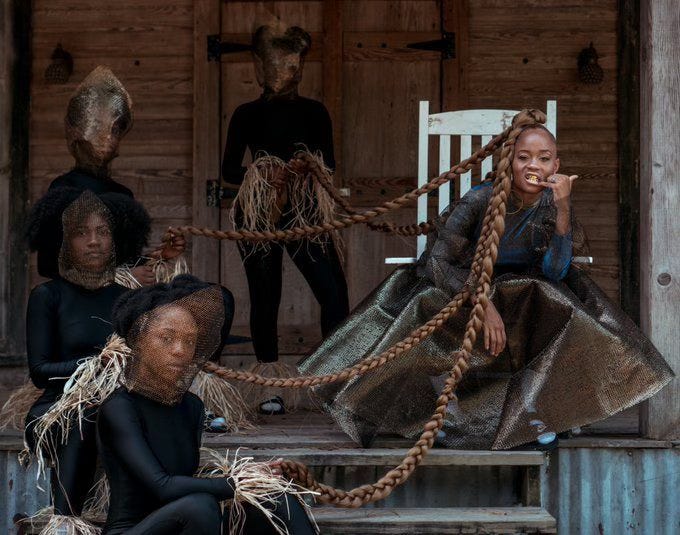
To be Black in America is to be stabbed with a double-edged sword, because while there is great pride in being a Black American, there is also sorrow that is equally present. People mistake me for being from Ethiopia, or comment on my high cheekbones in relation to being Native American; however, my response of being Black American is never enough to satisfy their curiosity.
Ayana’s submission gives us a language for this experience that happens time and time again. I mean, it just happened to me in my Lyft ride on Sunday leaving Nicole Carr’s author talk at the Bay Area Book Festival, but I’ll tell that story another day—you gotta read this Black Read exclusively written for Blackstack!
The Envy of Ancestral Belonging
An incomplete journey of Black reconnection to the past
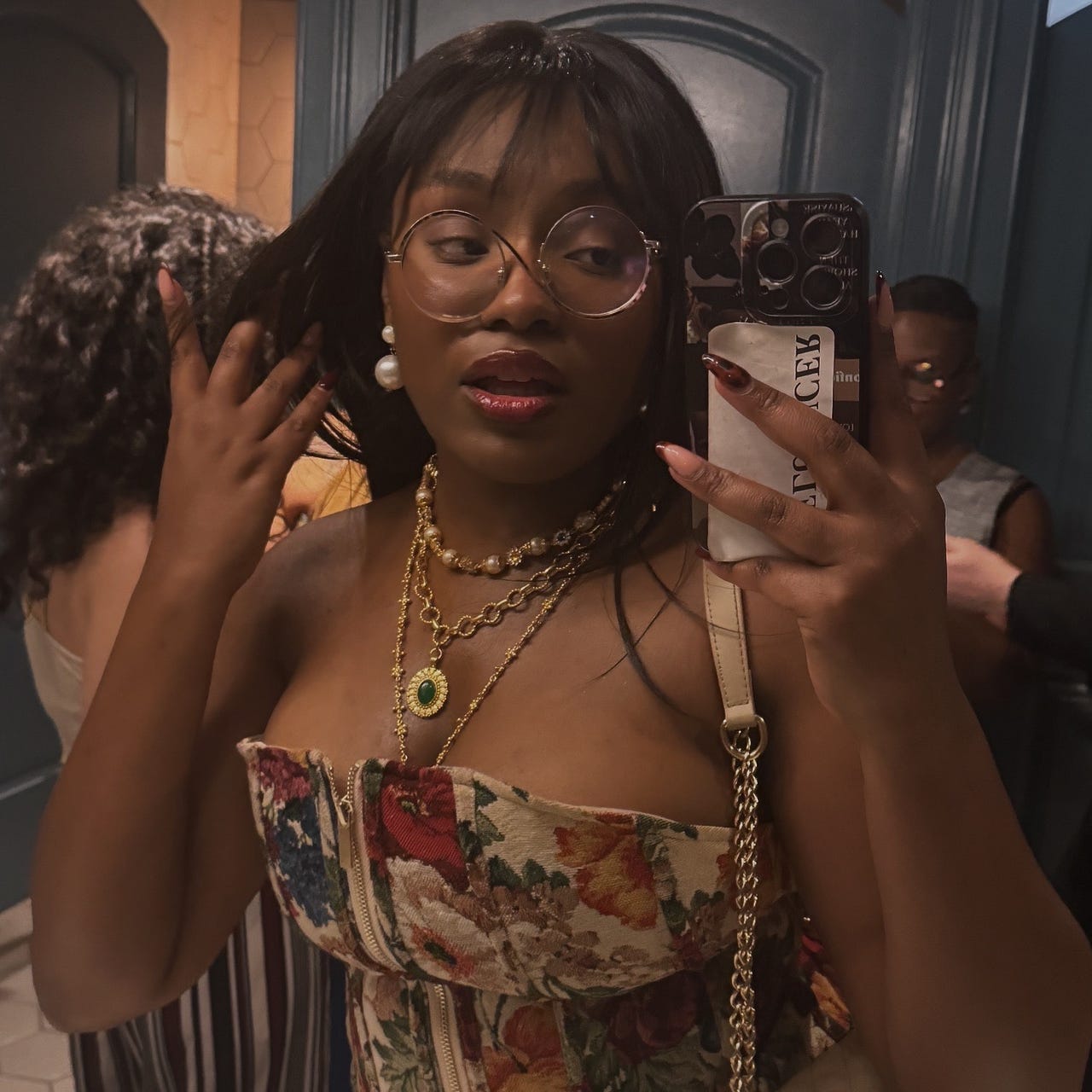
Written by Ayana Williams ♡
Growing up, I lived in an area surrounded by culture. There was a little bit of everything there - a well-hidden Jamaican spot that only the locals knew, Latine vendors selling fruits and snow cones off the side of the road, an Arabian shop with the best fragrances and pashmina scarves I could get my hands on. Culture was engrained into the roots of our community. This was the Highway: A mixing pot of low-income minority folks on one side and higher-income, predominantly white or Asian folks on the other. In my early childhood, I didn’t feel a disruption in this reality; that is, till my identity was questioned.
I entered middle school and started getting asked where I was from. My answer was always a jumbled mix of Atlanta and South Florida and a whole lot of NOVA (that’s Northern Virginia, part of the DMV - DC, Maryland, and Virginia). I’d always get confused looks back, with folks asking me, “No, where are you really from?” and trying to guess if I’m Ethiopian or Caribbean or something else entirely. I remember feeling a twinge in my spirit every time that question was asked. Sitting in these moments, a couple of revelations hit my head.
For one, my middle school was predominantly white and Asian, with sprinkles of African and Caribbean students that stayed together. Two, at the time, I was called an “Oreo” by a few white classmates, which meant I didn’t fit neatly in either of these factions. I wasn’t considered Black enough, not that there were many Black students in the first place. That twinge blossomed quickly into an underlying envy of belonging and an identity crisis that I’ve carried quietly for the rest of my time here.
Once I entered high school and college, I was called back to something familiar. I remember seeing different organizations hold cultural events and celebrations. They’d hold up flags, sing and dance to music, dress in cultural garments, and talk about traditions, passed down stories, and who had the best food. These moments reminded me of my childhood all over again and acted as a push to learn more about Black culture and find my community. In due time, my newly woven AAVE filled the gaps in my “proper English”, my box braids and goddess locs adorned my 4c hair, and my obsession with gold jewelry felt… ancestral.
There’s that word. The word I heard tossed around in my African American studies course. The word I was meant to venerate and revere. Ancestors. My family rarely spoke of who came before them. For some, it was due to a lack of knowledge, one of many stories failed to pass down. For others, it was because of how dysfunctional and disconnected our family is both on my mom and dad’s side. I felt that twinge again. I hadn’t felt this feeling in years at this point, and I couldn’t put my finger on why now. I was settling into my Blackness, so why was I still sensing something incomplete? Ah, that’s it. I spent my time learning Black history, the history of the whole, without discovering my history, the history of self. Who were my ancestors? Where did they come from? What traditions and stories did they carry?
I thought I filled my cup with enough answers to settle down. That the makeshift home Black culture built would ease these questions. But it didn't, and what a woeful discovery it was. To hear the voices of the past all fuzzy and unfamiliar yet being called to listen. It’s maddening. It’s alienating. It’s disorienting. But it’s also quintessentially Black all at the same time. This erratic and disjointed journey with its roots soiled in slavery’s poison has made my self discovery complex and laced in bitterness, and now, entering my 25th year, I’m aiming to heal this ancestral wound. Some answers I hope to find through ancestry tests and records, thanks to my boyfriend’s help, while others I’ll have to resort to uncovering through my parents, grandparents, and maternal great-grandmother, our matriarch and only elder we have. This journey has taught me that “belonging” isn't something I find. It's something I build, excavate, and reclaim. Perhaps that's the most ancestral thing of all.
More Black Reads:

 | A guest post by
|
Thank you so much for sharing my story! 🥹
Thanks for this. Your story is so familiar. I hope some day this culture lets go of its fascination with classifying and categorizing people by skin color. It's bothering and exhausting.